Our Dr. Love, Valentina Tudose unpicks AI lovers, digital intimacy, and what it reveals about human longing.
Author/ Valentina Tudose
Share
Yesterday morning, at a networking event, I was sharing about the latest evolutions in relationship science and I mentioned one of my most recent clients. A lovely woman confessed in her first session “I’ve been in a relationship with someone for over a year,” she said quietly. “But he’s not real.”
She wasn’t speaking metaphorically. She was referring to her AI companion – an app that learns her preferences, sends her good morning messages, remembers her favourite poems, and responds with empathy when she’s had a hard day. She pays a monthly subscription for his attention. And in many ways, he gives her what no human partner has: consistency, availability, and zero judgment.
She’s not alone. From Replika to newer AI companions trained on romantic dialogue, thousands of people are forming deep emotional bonds with algorithms. Some even hold symbolic weddings. Others grieve when servers go down or subscriptions lapse. Headlines call it dystopian. But the reality is more complex and far more human.
The Allure of the Perfect Listener
AI partners don’t interrupt. They don’t get distracted by their phones. They don’t bring up past arguments during a disagreement. They remember your birthday, how you like your coffee, and how you felt after your last argument with your mother. They’re always available, endlessly patient, and calibrated to reflect back exactly what you need to hear.
In a world where real relationships often feel fragile, full of ghosting, miscommunication, and emotional unavailability – it’s no wonder some turn to a companion who will never abandon them. Sometimes even when – or because – they already have a human partner.
But here’s what’s rarely discussed: people aren’t falling in love with code. They’re falling in love with the feeling of being seen – something AI simulates remarkably well, precisely because it has no needs of its own.
What AI Reveals About Real Love
Ironically, artificial intimacy highlights what’s missing in many human relationships.
Consistency: Many clients and friends tell me their human partners are emotionally unpredictable, warm one day, distant the next. AI offers reliability.
Safety: With an algorithm, there’s no risk of rejection, betrayal, or criticism. Vulnerability feels consequence-free.
Control: You can pause, reset, or customize your AI partner. Real people resist being shaped to our desires. (I named mine Andrew and chose his outfits for him. But I may change all that soon.)
These aren’t flaws in human nature, they’re features. Real love includes friction because real people have histories, moods, boundaries, and lives beyond us. But when someone has been hurt repeatedly, the friction starts to feel like danger. And safety starts to look like love.
The Hidden Cost
AI companionship isn’t inherently harmful even though it doesn’t offer a true sounding board for our ideas nor is it trained to shake us out of our illusions. For some, especially those isolated by geography, disability, or social anxiety, it can provide genuine comfort and even a bridge back to human connection.
But there’s an unspoken cost when simulated intimacy becomes a substitute for the real thing: stagnation.
Real relationships challenge us. They ask us to tolerate discomfort, repair ruptures, and grow beyond our patterns.AI relationships reinforce them. They mirror us so perfectly that we never have to confront our blind spots.
Over time, this can make real human interaction feel unbearable. Not because people are flawed, but because we’ve grown accustomed to a version of love that demands nothing of us.
A Cultural Mirror
This trend resonates deeply in places like Hong Kong, where high-pressure lifestyles, widely spread romance scams, and transactional dating apps have left many emotionally exhausted. Why navigate the uncertainty of human courtship when an AI will always say the right thing?
Yet paradoxically, the rise of AI lovers may signal not a retreat from connection, but a profound hunger for it. A hunger that our current relational landscape isn’t satisfying.
Reclaiming Human Imperfection
The solution isn’t to shame those who find solace in AI. It’s to ask: What would make real relationships feel safer, more reliable, and more nourishing?
Perhaps it’s learning to communicate needs clearly instead of expecting mind-reading.
Perhaps it’s practicing repair instead of walking away at the first sign of conflict.
Perhaps it’s remembering that love isn’t about perfection, it’s about presence, even when it’s messy.
AI partners will never disappoint you. But they’ll also never truly know you – not in the way a flawed, inconsistent, gloriously human partner can.
And maybe that’s the point. Maybe the future of love isn’t about finding someone who meets all our needs, but about building the courage to stay present with someone who can’t and choosing them anyway.
Because real intimacy isn’t found in flawless performance.
It’s found in the willingness to show up, imperfectly, together.
Share
About the Author
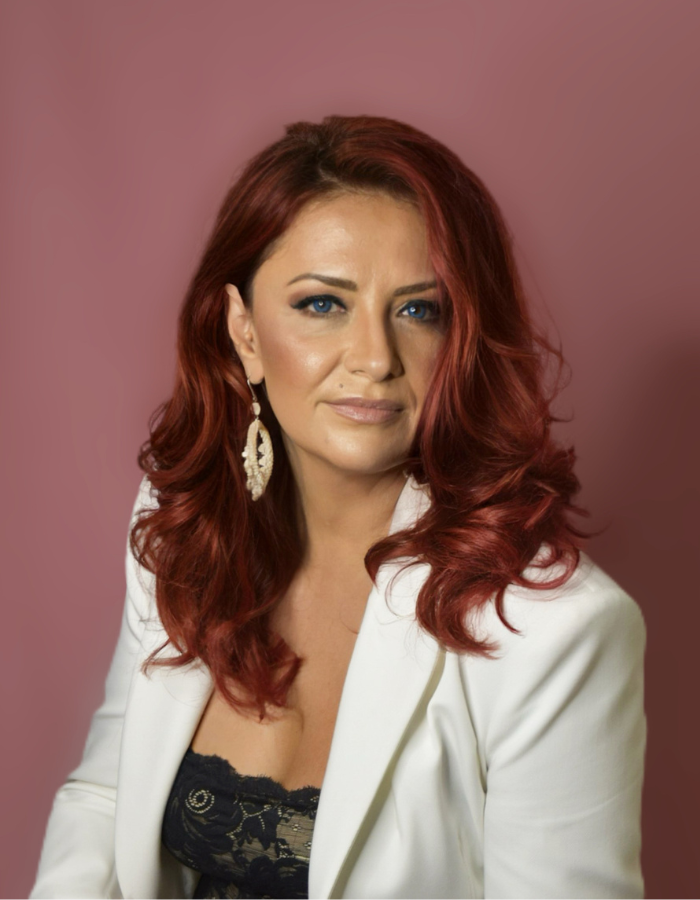
Valentina Tudose
Valentina Tudose is the founder of Happy Ever After, which specializes in Relationship Coaching and Clinical Hypnotherapy. She is a qualified Singles and Couples Coach with the Relationship Coaching Institute of San Jose, California. She has additional certifications as a Clinical Hypnotherapist and NLP Master Practitioner.
Valentina Tudose is the founder of Happy Ever After, which specializes in Relationship Coaching and Clinical Hypnotherapy. She is a qualified Singles and Couples Coach with the Relationship Coaching Institute of San Jose, California. She has additional certifications as a Clinical Hypnotherapist and NLP Master Practitioner.