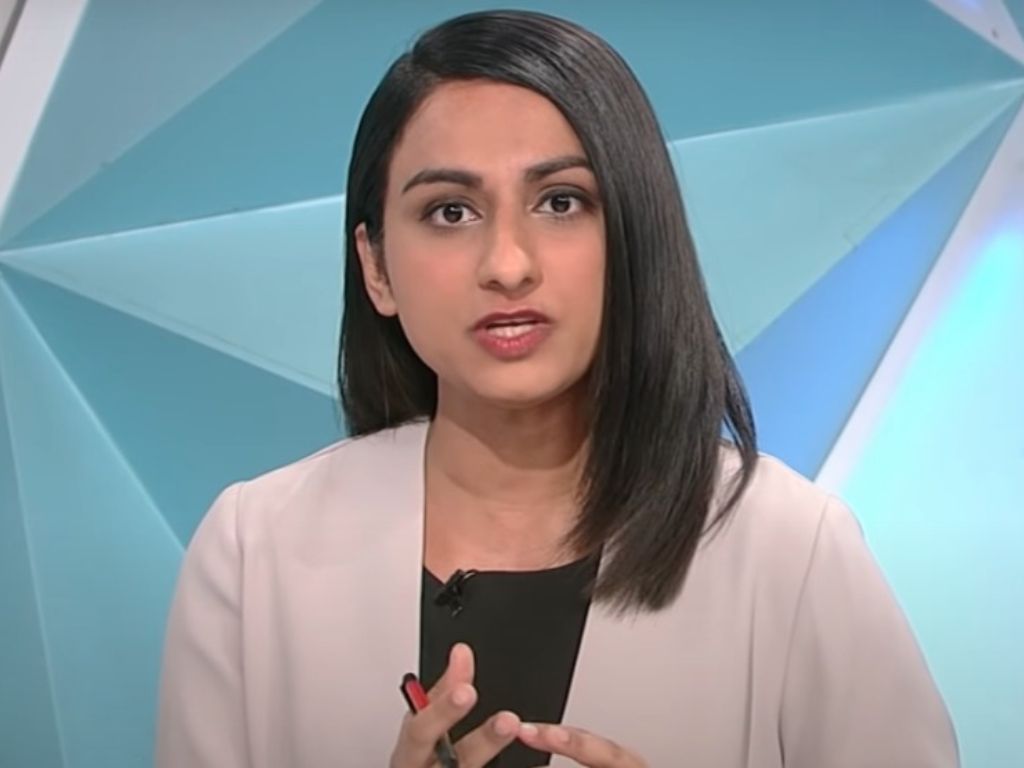
Hong Kong is my home, it’s where I was born and raised, but I’ve never left my heritage, my homeland, Pakistan. I still prefer wearing traditional Pakistani clothes, and purposely wear them outside, whether at university or in the workplace or at interviews and big events to show my identity, where I belong,” says Sabiha Marium, a final-year student at Hang Seng University.
‘Belonging’ is a key theme for Sabiha, who admits that despite opting to embrace her Pakistani roots, her identity in others’ eyes is a variable, “In Hong Kong, people consider me as Pakistani, and when I am in Pakistan, they consider me a Hong Konger, so at the end I am both or maybe neither? I joke around and say, I’m from Earth, but deep down, I feel I am a Pakistani Hongkonger.”
Although Sabiha’s parents do not speak Chinese, they purposely admitted her to a Chinese-medium school so she could learn Cantonese.
It was not an easy ride, shares Sabiha. “I wouldn’t always know how to do my homework as it was all in Chinese, so my mum and I would knock on our neighbours’ doors to have them teach me and help me finish what I needed to do. Every day we would go to a different neighbour, so they didn’t get annoyed by us.”
Over time, Sabiha gradually caught up
with the Chinese requirements of her school, which she says, allowed her to navigate Cantonese-speaking spaces more confidently.
As the eldest of four siblings, she started acting as a translator for her family, friends and relatives, whenever they needed assistance. “My mum would often send me to communicate, which not only improved my language skills but also strengthened my connection to the community and made me much more confident.”
“While I can’t speak for the entire Pakistani community in Hong Kong, I’ve noticed that younger generations tend to be fluent in Cantonese. They are often able to read, write and listen effectively, which helps us navigate daily life and integrate into local culture.” Knowing Cantonese has made it so much easier to make friends, find jobs and adapt to the Hong Kong lifestyle, she says, adding that there are some older generations, who are very fluent in Cantonese as they are either born in Hong Kong or have spent a long time here.
District Councillor Dr. Rizwan Ullah is one such member of an older generation who has mastered Cantonese. He says he speaks six languages including French.
Like Sabiha, Ullah was born in Hong Kong and is the eldest of his siblings. His father emigrated to Hong Kong and the family has been stationed here since.
Finance student Sabiha Mariam says there are quite a few misconceptions about Pakistanis in Hong Kong, and, “Many times, we returned to Pakistan to get married.
Ullah did not go through the local system but learned his Cantonese through local friends and TV.
Chinese and, specifically, the acquisition of Chinese among ethnic minority students would become the basis of his 2012 doctorate at HKU, which was, according to the university’s website, a critical analysis that revealed major gaps in the Chinese language education provision for ethnic minority students in Hong Kong.
This topic was gaining traction in the government at the time, and his findings were read by the former Chief Executive of the Hong Kong Special Administrative Region, Carrie Lam Cheng Yuet Ngor. The government’s 2014 Policy Address included specific recommendations that echoed Dr. Ullah’s work.
Ullah is currently Vice-Principal – Student Affairs of Law Ting Pong Secondary School and has received several honours for his work to support ethnic minorities, including appointments to the Youth Development Commission and Equal Opportunities Commission and a Medal of Honour in 2021.
“I’m a resilient person, and I believe that once you have an opportunity, you should seize it,” Dr. Ullah said, “I’m also not the type of person who does things only for personal gain. If it’s a society gain, then it’s my gain.”
Dr. Ullah’s first opportunity came in 2003 after he completed a business correspondence degree and joined the retailer City’Super. Miss Leung, former Vice Principal of Dr. Ullah’s alma mater, Delia Memorial School (Hip Wo), saw him by chance and suggested that he should apply for an urgent teaching vacancy there. At that time, Dr Ullah did not hold a conventional degree nor equivalent qualification in Chinese language education.
However, against the odds, he landed the position – provided that he obtained a qualification.
He passed the Postgraduate Diploma in Education at the Faculty, acquired a Master of Education (English Language for Teaching) from Hong Kong Baptist University, and then his PhD again from the Faculty – all before the age of 30.
Ullah left Delia Memorial School (Hip Wo) a couple of years ago to make his mark beyond a school catering to ethnic minorities. “If I can be doing this, I’m sure the next generation will achieve even more than I did,” he said.
Finance student Sabiha Mariam says there are quite a few misconceptions
about Pakistanis in Hong Kong. “Many times, we find ourselves underestimated, with people looking down on us as if we’re not “good” enough—whether it’s our language skills, the nature of our jobs, or other aspects of our lives.”
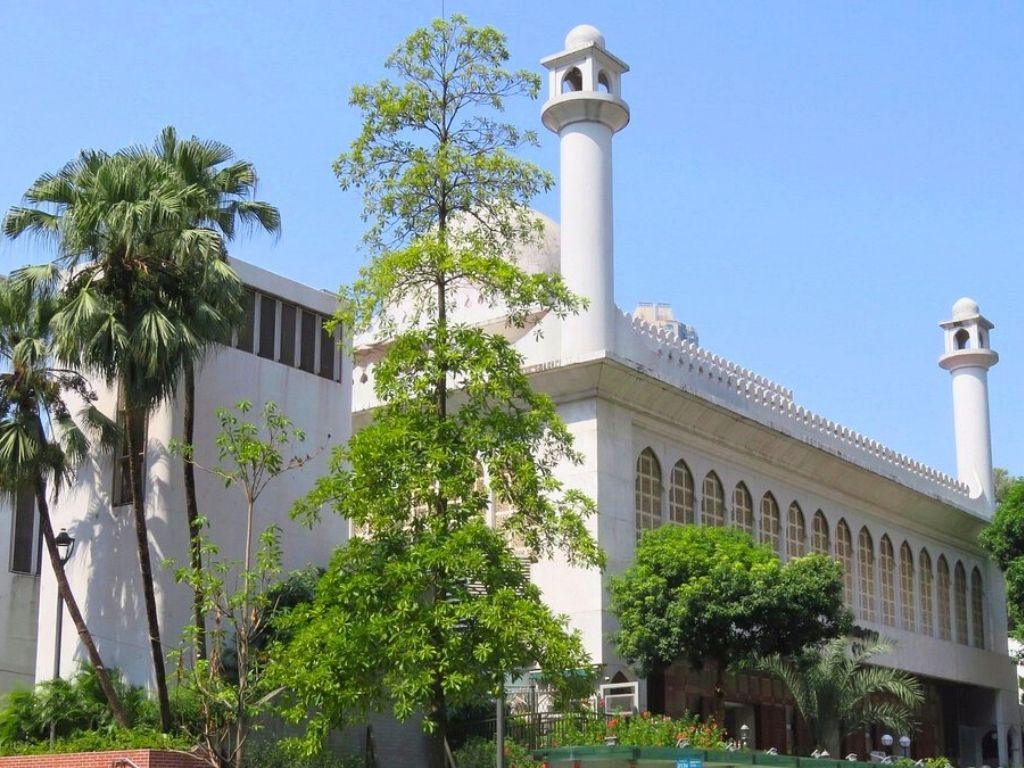
Sabiha says that what often gets overlooked is the rich history of Pakistanis in Hong Kong with many having roots that trace back to brave individuals who served in World War II on behalf of Hong Kong. “The Kowloon Mosque itself has a story tied to this history, and is a reminder of our contributions.”
Sabiha adds that it’s also important to highlight that many Pakistanis in Hong Kong are well-educated and skilled, despite appearances that might suggest otherwise.
“You might see someone delivering your food, but they could have been a lawyer or doctor back home. Unfortunately, because Hong Kong doesn’t recognise foreign degrees, many of us end up in jobs that don’t reflect our true capabilities.”
While Ullah said little about the challenges during our interview, Sabiha says that despite her Cantonese-language skills, as a Pakistani student in Hong Kong, she has faced several challenges to do with identity, language and ‘cultural misunderstanding’.
“Adapting to a different cultural environment is initially difficult. There were moments when I felt my cultural background wasn’t fully understood or appreciated by my peers, whether it be food, clothing or little habits, which has sometimes led to feelings of isolation. Balancing my Pakistani identity with the local culture has been a journey. I often feel the need to ambassador my culture.”
Ullah says that minorities often talk about discrimination but says that it is the responsibility of the minority to assimilate, rather than integrate, through the language to bridge cultural misunderstandings. Assimilation, he stresses, is quite different and still allows Pakistanis to retain their customs and traditions.
Regardless of the negative situations in which Sabiha has sometimes found herself, she describes the Pakistani community in Hong Kong as friendly. “Everyone knows each other as we Pakistanis love to get together and meet on a regular basis. Even if we don’t know the person, we greet each other with an “Aslamualikum” – which means, Peace be upon you.
Sabiha also describes a community of ethnically diverse Hongkongers who share an understanding of what it means to be ‘othered’. “We invite each other to celebrate festivals, whether it is Eid, Diwali, small events or big fat weddings.”
Pakistanis have been part of Hong Kong’s history since the mid-19th century, arriving initially as British Indian sailors, traders and police officers (when Pakistan and India were one country). Following Pakistan’s independence in 1947, the community established a distinct, tightly-knit diaspora, contributing significantly to local security and trade. Today, they form a vital, though sometimes socioeconomically challenged, 0.2% of Hong Kong’s population, primarily residing in areas like Tsim Sha Tsui and Kwai Chung.
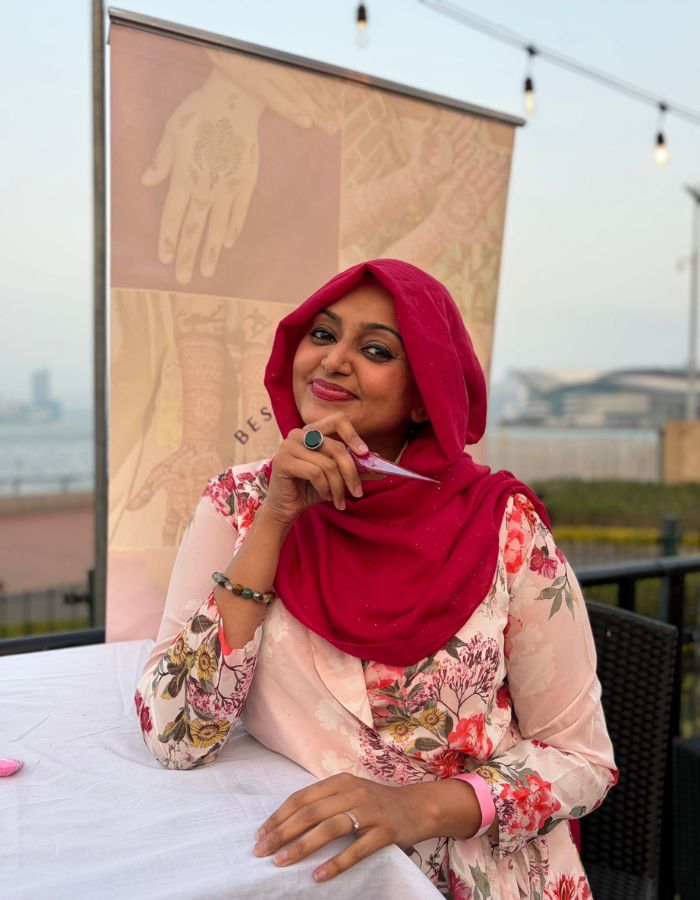
Sara Mushtaq, is a henna artist born in Karachi who came to Hong Kong at the age of nine. She has lived in Pakistan and Dubai as an adult before returning to Hong Kong three years ago.
Mushtaq’s work with henna, was inspired by her mother who was a henna and makeup artist and with whom she was team tagged for the very first wedding she worked on with her mother, at the age of 11.
The artist and entrepreneur loves working with the rich, cultural practice of henna and has teams not just in Hong Kong, but in Karachi and Dubai at the ready for destination wedding work that crops up. She also does corporate sessions and workshops.
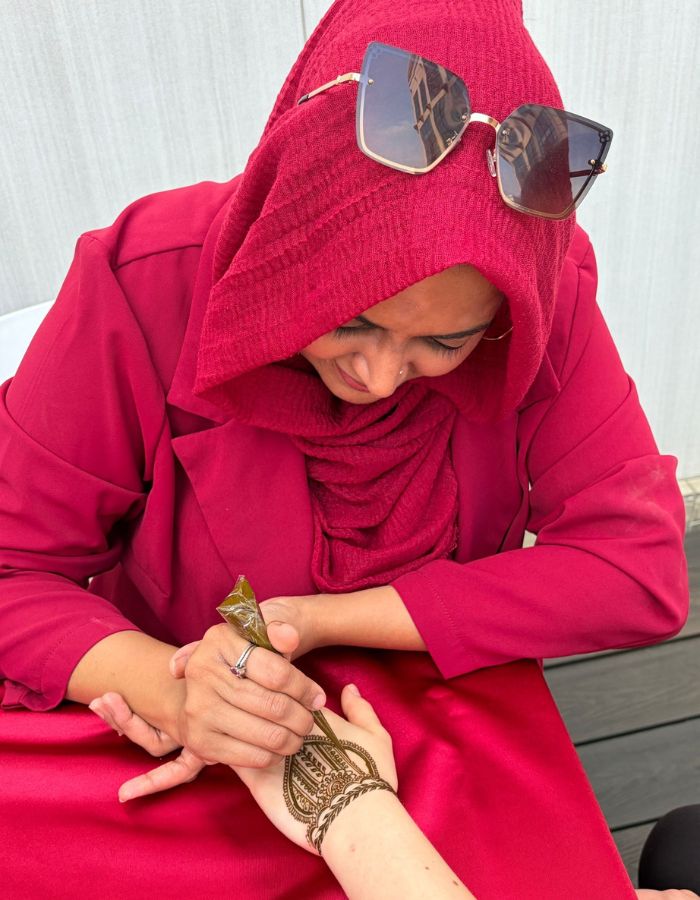
Mushtaq says that customarily, the bride is the main focus with henna administered on her right and left hands usually taking up to 10 hours. “This usually takes place 48 hours before the big event to ensure that the colour has had sufficient time to darken.” She shares that for good luck, grooms typically have the wife’s name henna-d on to their hand or simply a dot from the same henna cone that’s been used on the bride.
Mushtaq makes her own henna at home that’s derived from 100 per cent natural ingredients and has also developed a white henna for Caucasian brides, which she says looks “spectacular with their white wedding gowns”.
While typically confined to the body as canvas, Mushtaq was commissioned in 2024 by AIA to do a 14m henna design on vinyl which visitors could help to colour in when they visited the harbourfront space, to fit in with that year’s theme of inclusion.
For those who might not know, Ramadan is the ninth month of the Islamic lunar calendar, observed by Muslims worldwide as a period of fasting, prayer, reflection and community. During this holy month, adherents abstain from food, drink, and other physical needs from dawn until sunset. Think a water fast is hard? This takes a lot of discipline.
Fasting during Ramadan is one of the Five Pillars of Islam, which signifies spiritual growth and self-discipline. It is also a time for increased devotion, with many Muslims engaging in additional prayers, reading the Quran, and performing acts of charity. The month culminates in Eid al-Fitr, a festival celebrating the end of fasting and showcasing gratitude and communal harmony.
Experiencing Ramadan in Hong Kong as a Pakistani is a unique blend of cultural and religious practices.
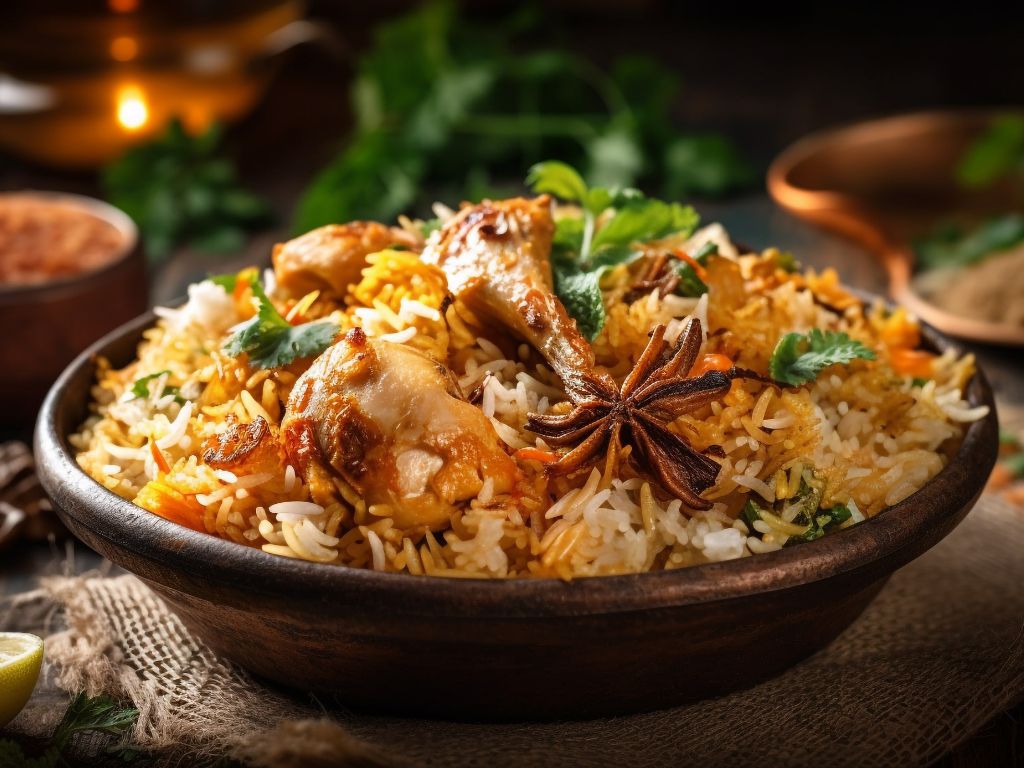
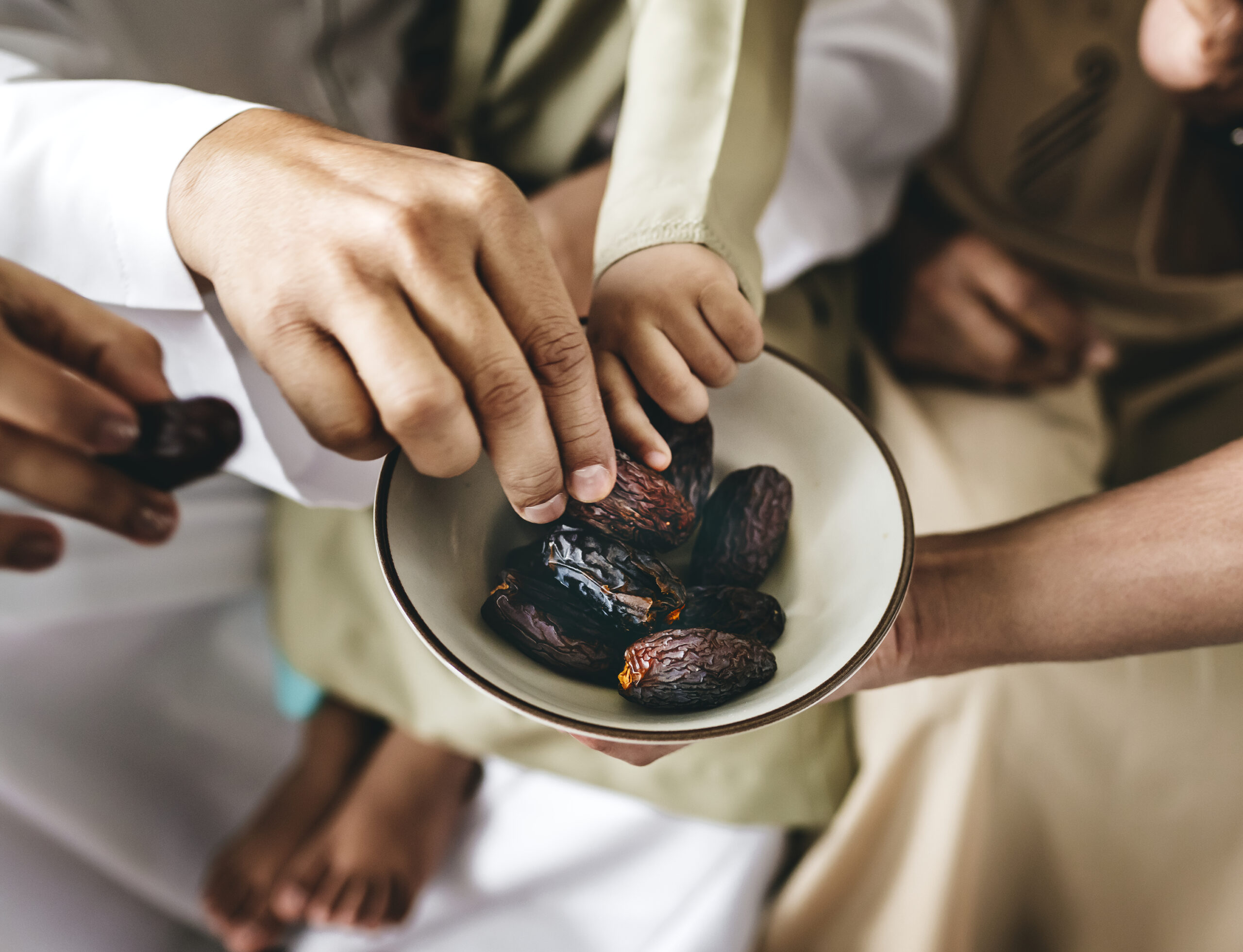
One of the most significant aspects of Ramadan is the daily iftar, the meal that breaks the fast at sunset. This may be done at home with a simple serving of dates or in one of the Halal restaurants here.
In Hong Kong, there are numerous restaurants, particularly in areas like Chungking Mansions in Tsim Sha Tsui, that cater to the Pakistani and broader Muslim community that includes Indonesians and others. Here, the aroma of biryani and kebabs fills the air, and families gather to enjoy traditional dishes together.
Local mosques, like the Kowloon Mosque on Nathan Road, become central hubs for worship and community during Ramadan. The mosque organises special Tarawih prayers each night, drawing a diverse mix of local and international attendees. The sense of unity and spirituality is palpable as Muslims from various backgrounds come together to pray and reflect, embodying the essence of Ramadan.
Shopping for halal food also plays an important role during this month. Markets in neighbourhoods like Sham Shui Po and Western District offer a variety of ingredients essential for preparing traditional Pakistani meals. Halal butchers and grocery stores provide fresh meats and spices, allowing families to prepare iftar meals. Additionally, many Pakistani families engage in charitable activities, distributing food to those in need during Ramadan, reflecting the core values of compassion and generosity that the month embodies.
Several prominent individuals of Pakistani descent have made significant impacts in Hong Kong across various fields. Here is our pick of three of them.
Key Pakistani Organisations & Clubs:
Consulate General of Pakistan Hong Kong, www.pakistan.hk
Business:
The Pakistan GBA Chamber of Commerce Hong Kong, www.pgcchk.com
Recreation & Culture:
Pakistan Association of Hong Kong (PAHK), www.pakassochk.com
Religion:
Pakistan Islamic Welfare Union INC HK (PIWU), www.piwuhk.org
Minhaj-ul-Quran International (MQI), www.minhaj.org
For over 20 years, the people behind BN have been creating content on the best things in life: food, travel and inspirational people.
Want the latest insights and fresh content delivered straight to your inbox? Subscribe to our newsletter and stay updated with our exclusive content!