Being Neighbourly captures the icons and lesser-known sights of one of Hong Kong's most misunderstood districts
Author/
Being Neighbourly
Share
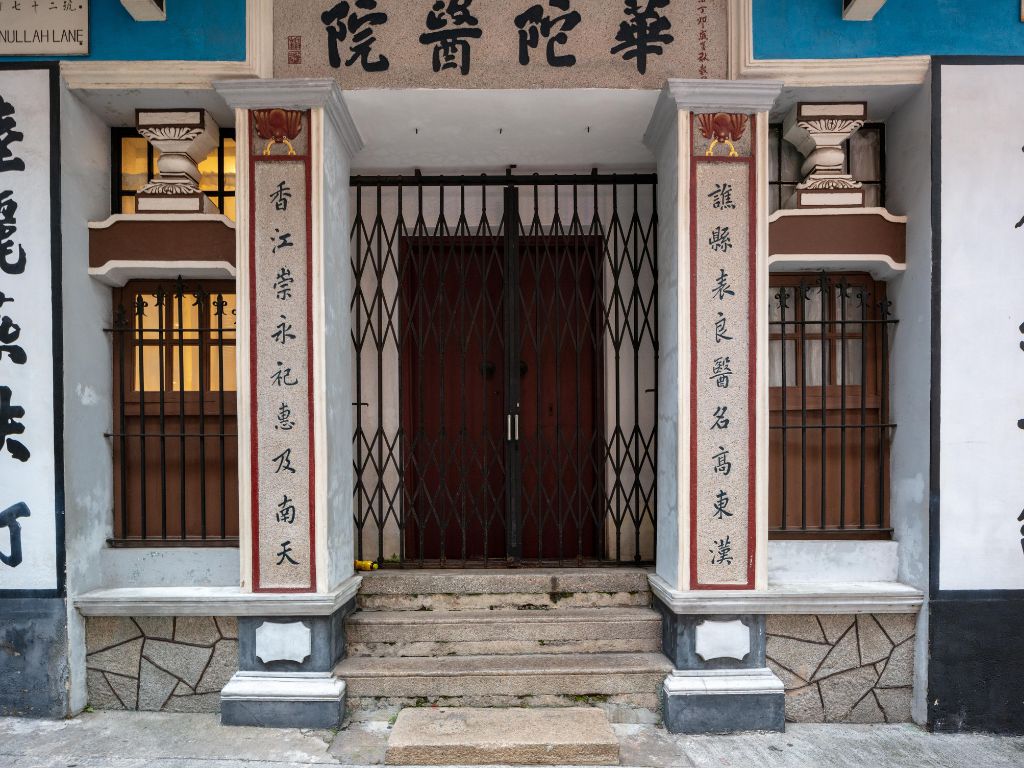
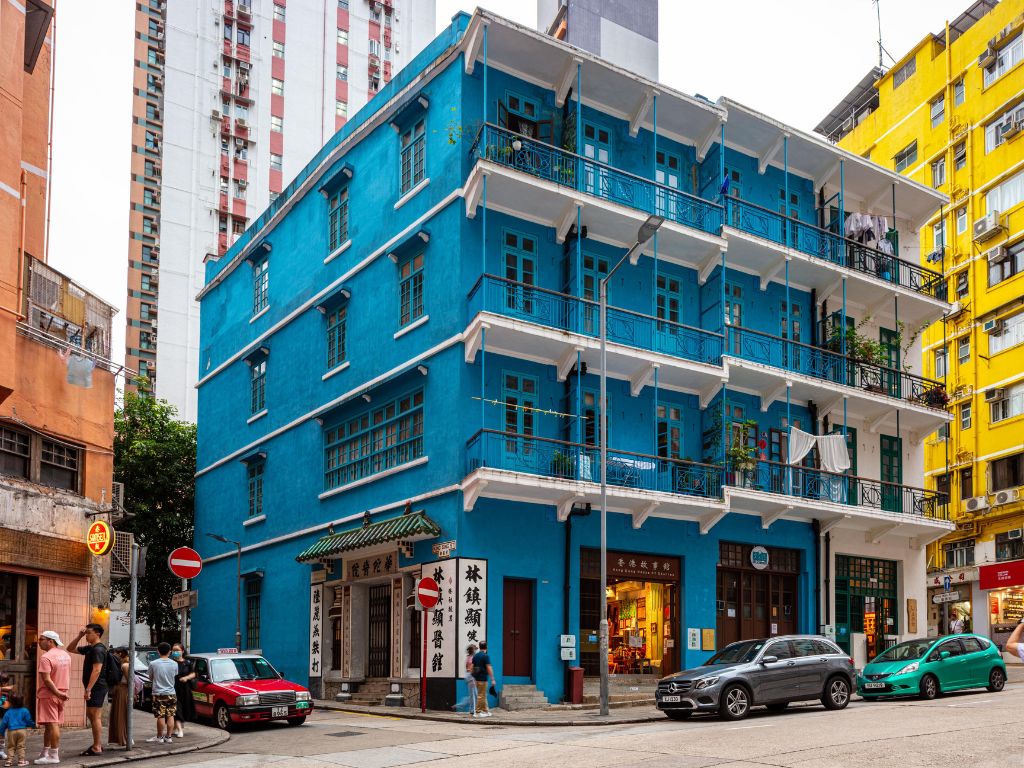
Blue House in Wan Chai. All photography by Peter Sung.
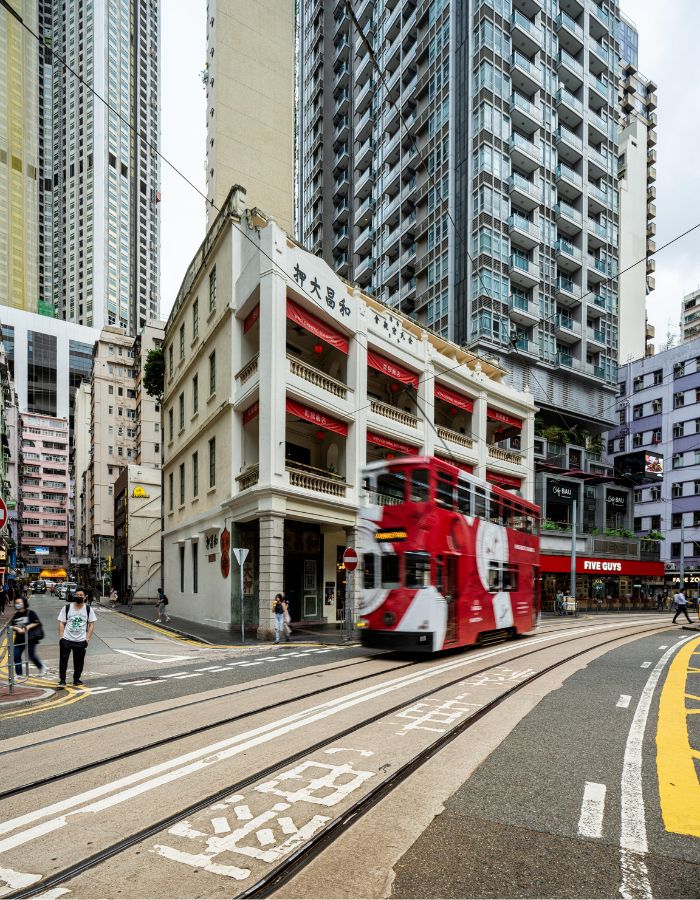
Poor Wan Chai. Of all of Hong Kong’s 18 districts, it is perhaps the one that is most misunderstood. Still associated with trashy bars and clubs, despite many having closed, lots may be surprised to learn that Wan Chai’s parameters are much wider and include residential areas such as Happy Valley, Jardine’s Lookout, Wong Nai Chung Gap and Tai Hang, boasting some of Hong Kong’s largest apartments and houses. Wan Chai is, in fact, Hong Kong’s most affluent district. It has the second-highest educationally qualified residents after its neighbour Central & Western, with the highest-bracket incomes, the seccond-lowest population and the third oldest residents.
Land Area 10.2 km2
Population* 166,695 *2021 figures
Biggest Neighbourhood Happy Valley
Wan Chai
The area known as Wan Chai is loosely that surrounding Tonnochy Road and the Wan Chai station of the MTR, which is between Admiralty on the west and Causeway Bay on the east.
Wan Chai North
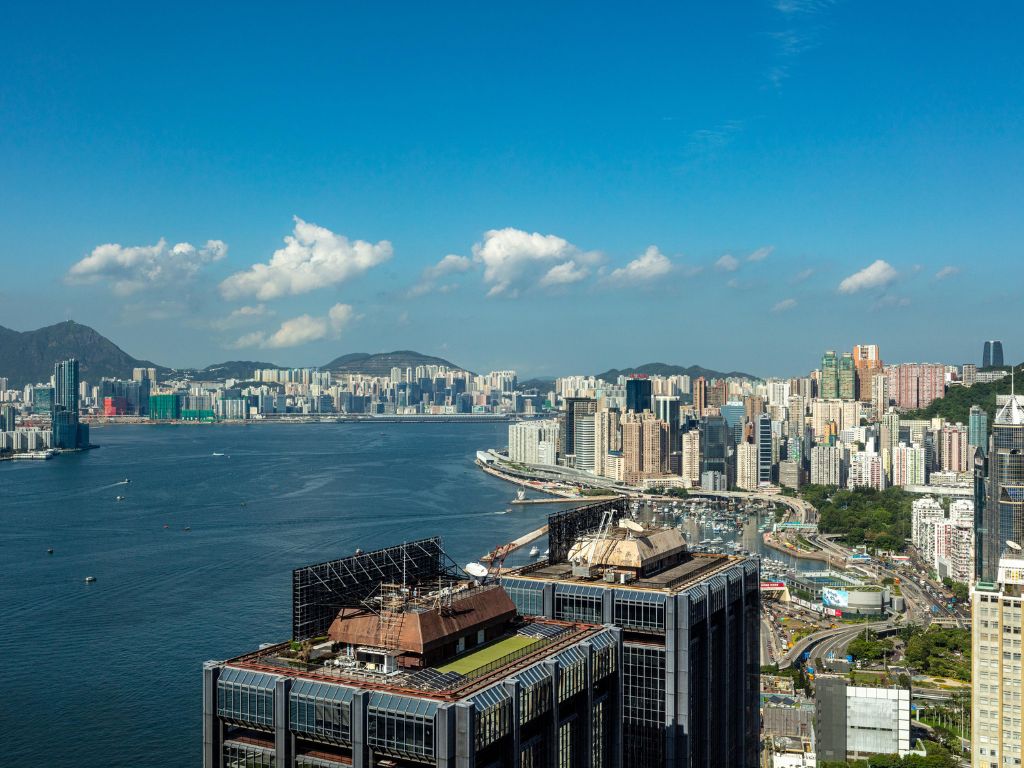
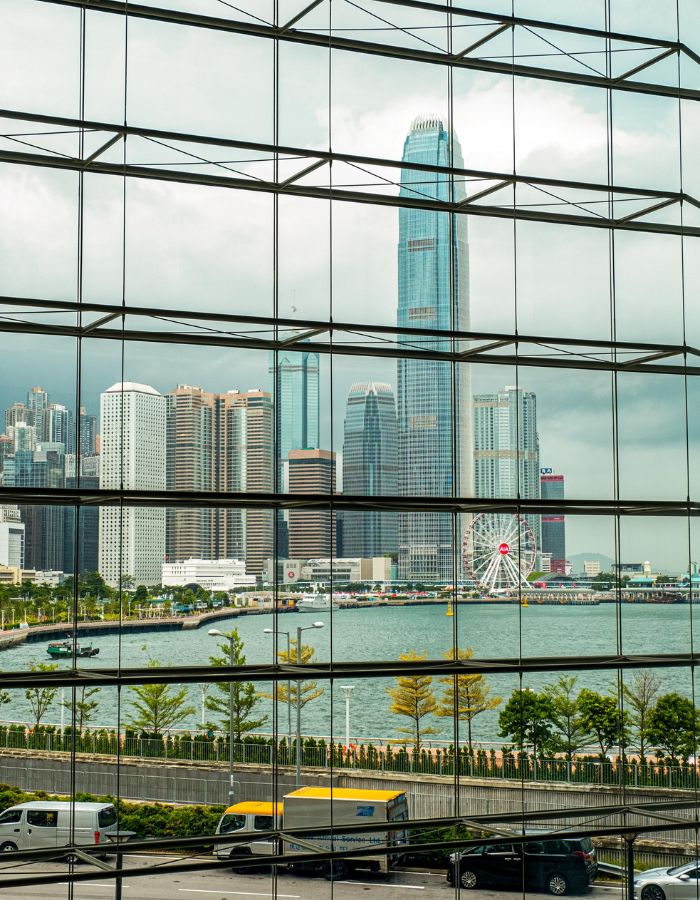
Wan Chai North, where major buildings such as the Hong Kong Convention and Exhibition Centre and Central Plaza stand, refers to the zone north of Gloucester Road, reclaimed from the sea after the 1970s. Next to the Hong Kong Convention and Exhibition Centre is the “Golden Bauhinia Square”. There is a hugesculpture of a bauhinia, which is the representative flower of Hong Kong, in the square. This is a popular tourist spot in Hong Kong for visitors from Mainland China and also the location of a flag-raising ceremony which occurs daily and in a special form on Chinese National Day and other occasions.
Causeway Bay
Causeway Bay is an area and a bay on Hong Kong Island, Hong Kong, straddling the border of the Eastern and the Wan Chai districts. It is a major shopping, leisure and cultural centre in Hong Kong, with a number of major shopping centres. The rents in the shopping areas of Causeway Bay were ranked as the world’s most expensive for around a decade after overtaking New York City’s Fifth Avenue in 2012.
The typhoon shelter of Causeway Bay and the Tin Hau Temple reveal that the area was once a fishing town. Before urban development and massive land reclamation, Causeway Bay was a heavily silted bay. Its former shape can be found on maps by tracing Tung Lo Wan Road, which goes along the former bay. In the early stage of development, a causeway was built, which is the present-day Causeway Road. In the 1950s, the coastline was further pushed forward when the remains of the bay were reclaimed for the Victoria Park, when the statue of Queen Victoria was brought back from Japan. The statue had been taken away during the Second World War from Statue Square at Chater Road, Central. Kellett Island off the coast of Causeway Bay has been connected to the Hong Kong Island by a breakwater as a result of the land reclamation.
Causeway Bay’s history as a shopping district dates back to 1960, when Daimaru, a Japanese style department store opened in Great George Street. By the 1970s, Causeway Bay has developed into Hong Kong’s main shopping district. A number of other Japanese style department stores, including Matsuzakaya, Mitsukoshi and Sogo, opened in the 1970s and 1980s, giving Causeway Bay the nickname of “little Ginza”. In the 1990s, several major shopping centres were constructed, strengthening Causeway Bay’s status as one of the major shopping districts in Hong Kong.
Causeway Bay or East Point is one of Hong Kong’s major shopping districts. It includes the 13-storey Japanese-style department store Sogo, as well as shopping centres such as Times Square and Hysan Place. There are also smaller malls such as World Trade Centre, Windsor House, Hang Lung Centre, Fashion Island (formerly Daimaru), Fashion Walk, Lee Garden One and Lee Garden Two. Causeway Bay is one of the most crowded and central areas in Hong Kong. The area contains many trendy shops carrying both locally made and imported fashion and products from around the world. As such, it is a popular social spot for young people. Many shops are open until after midnight. Notable hotels in Causeway Bay include Park Lane Hotel and Regal Hong Kong Hotel. Several boutique hotels have opened recently, including Lanson Place Causeway Bay, Hong Kong, Mira Moon Hotel on Jaffe Road.
Happy Valley
Happy Valley is an upper-income residential area in Hong Kong, located on Hong Kong Island. The area is bordered by Caroline Hill to the east, Jardine’s Lookout to the south, Morrison Hill to the west, and Causeway Bay to the north. Administratively, it is part of Wan Chai District.
The area is home to the Happy Valley Racecourse,Hong Kong Racing Museum, Hong Kong Jockey Club Happy Valley Clubhouse, Hong Kong Sanatorium & Hospital, Hong Kong Adventist Hospital – Stubbs Road, home to a number of sports clubs including Valley RFC Rugby Club, Craigengower Cricket Club, Hong Kong FC football club, and a number of cemeteries including the Hong Kong Cemetery.
Two of the territory’s tallest residential buildings, Highcliff and The Summit are specifically in Stubbs Road, facing Mount Nicholson. Happy Valley hosts six cemeteries, from south to north, the Happy Valley Jewish Cemetery, the Hindu Cemetery, the Parsee Cemetery, Hong Kong Cemetery, St. Michael’s Catholic Cemetery, and the Muslim Cemetery.
The Hong Kong Racing Museum and the associated Happy Valley Racecourse, one of the two tracks of the Hong Kong Jockey Club, is in Happy Valley. Whenever a race runs, surrounding traffic patterns have to be changed: cars have to enter Happy Valley and the racecourse via Wong Nai Chung Road in a clockwise fashion, and the road may be heavily congested. The stadium lights in the racecourse illuminate nearby buildings even when the buildings themselves are unlit.
Jardine's Lookout
Jardine’s Lookout is a mountain in Wan Chai District, Hong Kong, with a height of 433 metres. It is located east of Happy Valley, south of Causeway Bay, and west of Braemar Hill and north of Tai Tam Country Park.
A low-density, high-end residential area called Jardine’s Lookout can be found between Wong Nai Chung Gap and Mount Butler. The residential area of Jardine’s Lookout consists of thirteen roads named after famous British persons during Hong Kong’s colonial times. Addresses on Tai Hang Road, Tai Hang Drive and Chun Fai Road are considered to be Tai Hang Mid-levels or Happy Valley, not Jardine’s Lookout. Jardine’s Lookout is surrounded by several other hills including Mount Nicholson, Violet Hill and Mount Butler.
Named after William Jardine, founder of Jardine Matheson. It was from here, in the days of the sailing ships, that a watch was kept for the first glimpse of the sails of the firm’s clippers coming from India and London. As soon as a vessel was signaled, a fast whaleboat was sent out to collect Jardine’s mail. The correspondence was rushed back to the office so that the directors could have the first possible information on the world’s markets. (This practice saved the company on at least one occasion, in 1866, when it learned of the collapse of the discount house Overend, Gurney and Company, about one hour before others did, and quickly withdrew its balances at a local bank before anyone else had heard of the news.)
Jardine’s Lookout was the sight of fierce conflict in the Battle of Hong Kong and particularly, the Battle of Wong Nai Chung Gap.The Hong Kong Volunteer Defense Corps and Middlesex Machine gunners manned two pillboxes and other areas defending the pass around Jardine’s Catchwater, as well as Canadian Winnipeg Grenadiers defending the adjacent Mount Butler. Japanese forces, after landing on the North Shore of Hong Kong Island, used Sir Cecil’s Ride and moved up to this pass midway up the lookout and were engaged by Commonwealth forces. The fighting was the preliminary conflict in the Battle of Wong Nai Chung Gap.
Jardine’s Lookout and Mount Butler are popular for hikers who can enjoy scenery of Victoria Harbour. There are different routes to the top of the mountains and hikers often start near Hong Kong Parkview through Wilson Trail. Jardine’s Lookout Gallery Route has some of the most beautiful sceneries of Hong Kong Island.
Due to its scenic view and low population density, Jardine’s Lookout is an affluent neighbourhood with the most expensive houses in Hong Kong, with prices higher than Victoria Peak. The residents of this community include highly placed expatriates, government officials and successful business people.
Stubbs Road
Stubbs Road is a road located in Mid-Levels East, Central, Hong Kong, which connectsHappy Valley to The Peak area on Hong Kong Island, Hong Kong, through an area near the Wong Nai Chung Gap. It runs uphill from Queen’s Road East and goes through a residential area of luxurious high-rise tower blocks.The road is named after the 16th Governor of Hong Kong, Sir Reginald Edward Stubbs.
Stubbs Road is an example of the city’s “cultural diversity”: one of Hong Kong’stallest residential buildings, Highcliff, and the historical Chinese style building, King Yin Lei, are situated on this road.
Opus Hong Kong, a 12-story residential block designed by Frank Gehry, is located on 53 Stubbs Road. The location on Stubbs Road has been owned by the Swire Group for 60 years. It originally was the home of the most senior executive in Swire.
Hong Kong Adventist Hospital is located along the road.
Wong Nai Chung Gap
Wong Nai Chung Gap (‘The gorge that yellow mud is gushing out of’) is a geographic gap in the middle of Hong Kong Island in Hong Kong. The gap is between Mount Nicholson and Jardine’s Lookout behind Wong Nai Chung (Happy Valley). Five roads meet at the gap: Wong Nai Chung Gap Road, Tai Tam Reservoir Road, Repulse Bay Road, Deep Water Bay Road and Black’s Link. It is a strategic passage between the north and south of the island, though less so today since the opening of the Aberdeen Tunnel.
In the 1930s, the British army began installing defence structures at the gap as a strategically important location, being the primary passage between the North and South of Hong Kong Island. Defensive structures included bunkers along Wong Nai Chung Gap Road, along with fortifications on Jardine’s Lookout, near the end of Sir Cecil’s Ride.
The Battle of Wong Nai Chung Gap was the largest sustainment of casualties in a single day, on both sides, in the whole conflict. Its subsequent capture by the Japanese effectively led to the downfall of Hong Kong Island, splitting the forces there in two (Separating East/West Brigades). At the time of this Battle, the Wong Nai Chung Gap area included defenders of the Middlesex Regiment, The Winnipeg Grenadiers and the HKVDC. Canadian Army Brigadier John K. Lawson was present at the HQ and involved in the Battle.
Tai Hang
Tai Hang is an area southeast of Causeway Bay located in the mid-north of Hong Kong Island in Hong Kong. It is home to many luxurious private apartments.Residents are predominantly more affluent Hong Kong locals and expatriate professionals.
The name of Tai Hang, literally ‘Big nullah’, originates from the nullah that passed through the area. The nullah has been covered and made subterranean; this has been converted into Wun Sha Street and Fire Dragon Trail.
The area of Tai Hang is divided into upper and lower areas. The upper area includes a public housing estate Lai Tak Tsuen and some highrise residential blocks for affluents, such as Illumination Terrace (5-7, Tai Hang Road) or Ronsdale Garden (25, Tai Hang Drive). The lower area has many old residential blocks, with a number of restaurants along the streets. It is named after a stream (or drainage) from nearby hills.
The Lin Fa Temple is located at the end of Lin Fa Kung Street. It was originally built 1863, during the Qing Dynasty, and was reconstructed in 1986 and 1999. The original use of the temple was a worship place for Kwan Yin, the goddess of mercy.
Stay posted for our Wan Chai insider guides coming soon.
Peter Sung is a talented photographer who was born in Hong Kong. When he’s not in the territory, Sung is travelling for work in the Mainland and beyond. His stunning colour and black and white photographs have been recognized by National Geographic and in November 2024, he was awarded the recipient of the inaugural ‘Being Neighbourly Creativity Award 2024’.
Share
About the Author
Being Neighbourly
For over 20 years, the people behind BN have been creating content on the best things in life: food, travel and inspirational people.
Browse our Shop!
From books to posters, notebooks and pencils, we've got you sorted.