Being Neighbourly x Sean Robinson, certified Yoga instructor
Plank Pose - Great for Pilots
Author/
Being Neighbourly
Share
When asked to point to your core, most people gesture to their abdomen, or the ‘rectus abdominus,’ commonly known as the ‘six-pack.’ While we all have this muscle to varying degrees, the core encompasses much more. A strong core requires stability in the front, sides, and back, just like a solid house. This is why the plank pose is essential; it builds strength and resilience in all sides of the core. Plank is as much about mental fortitude as it is about physical strength. As your body wobbles, staying steady becomes a practice in stability. With time, the pose will feel easier—similar to piloting a plane in perfect conditions. Once mastered, challenge yourself by lifting an arm or leg, enhancing your focus and adaptability—skills vital for any pilot.
How to do the pose
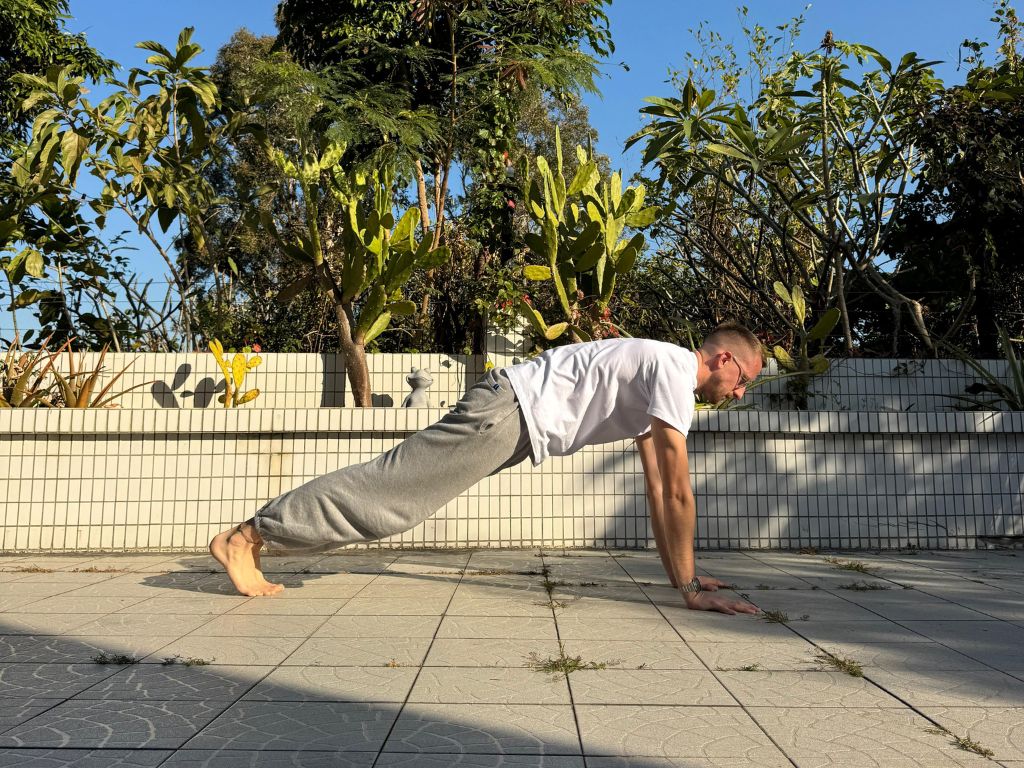
Sean Robinson demonstrating the Plank pose.
1. Start in a Tabletop position
Begin on your hands and knees with your wrists directly under your shoulders and knees under your hips.
2. Extend your legs
Step your feet back one at a time, aligning your body into a straight line from head to heels. Keep your feet hip-width apart.
3. Engage your core
Tighten your abdominal muscles, pulling your belly button towards your spine to stabilize your core.
4. Align your head and neck
Keep your head in a neutral position, gazing slightly forward to avoid straining your neck.
5. Hold the position
Distribute your weight evenly across your hands and feet. Hold this position for 20-30 seconds, or longer if you’re comfortable.
6. Breathe
Maintain steady, even breaths throughout the pose, focusing on your core engagement.
7. Release
To come out of the pose, slowly lower your knees to the ground and return to the tabletop position.
Tip: Keep your hips in line with your shoulders; avoid sagging or raising them too high. If you find it difficult, you can perform a modified version by lowering your knees to the ground.
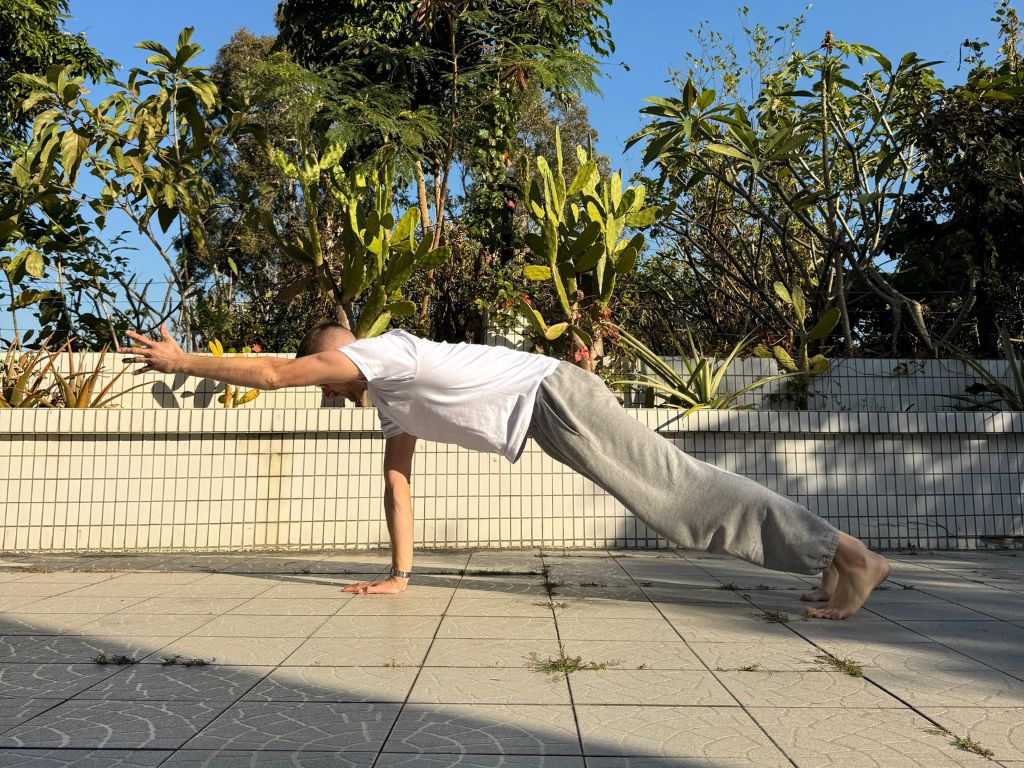
Sean Robinson demonstrating a variation of the Plank pose.
Benefits
Strengthens the core, arms, and legs
Improves posture and balance
Enhances overall stability
Practice regularly to build strength and endurance
Extra Information
Despite breathing an average of 18 times per minute—over 25,000 times a day—how often do you breathe consciously? Most of our breaths are controlled by the autonomic nervous system, occurring on autopilot. While this is beneficial, there are times when we should take manual control. When it comes to breath control, less is more. Resonant breathing is simple yet powerful; it utilises the effective 5.5-second rhythm. Inhale for 5.5 seconds and exhale for 5.5 seconds.Five cycles can evoke calming effects, but the more cycles you practice, the better.
Sean is a self-proclaimed nerd – obsessed with words, anatomy and pedagogy (the art of teaching).
If you’ve been to his classes, or seen his Instagram, you also know he loves to draw. He uses his (child-like) drawings to facilitate his teachings in an attempt to better serve those who, like him, are visual learners.
Before Yoga his primary form of exercise and expression was BMX – a bike designed for performing tricks which is honestly was too small for a person over 6 feet tall.
In his past life he was a speech and language therapist which probably explains the fascination with communication.
Stay tuned for Sean Robinson’s upcoming Yoga for the Professions contributions.
Share
About the Author
Being Neighbourly
For over 20 years, the people behind BN have been creating content on the best things in life: food, travel and inspirational people.
Browse our Shop!
From books to posters, notebooks and pencils, we've got you sorted.