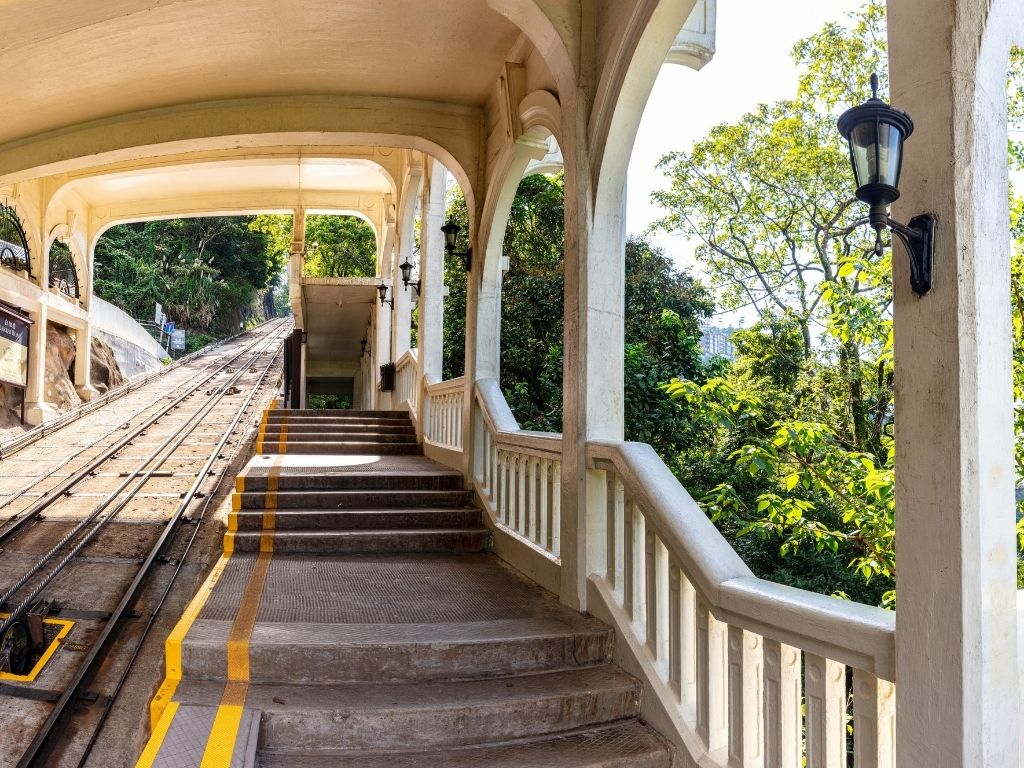
At the time of writing, the Peak Tram is Asia’s steepest funicular railway, carrying passengers up a dramatic 25.7°–27° gradient from Central to Victoria Peak. It’s also the world’s oldest funicular: transporting locals and visitors since 1888.
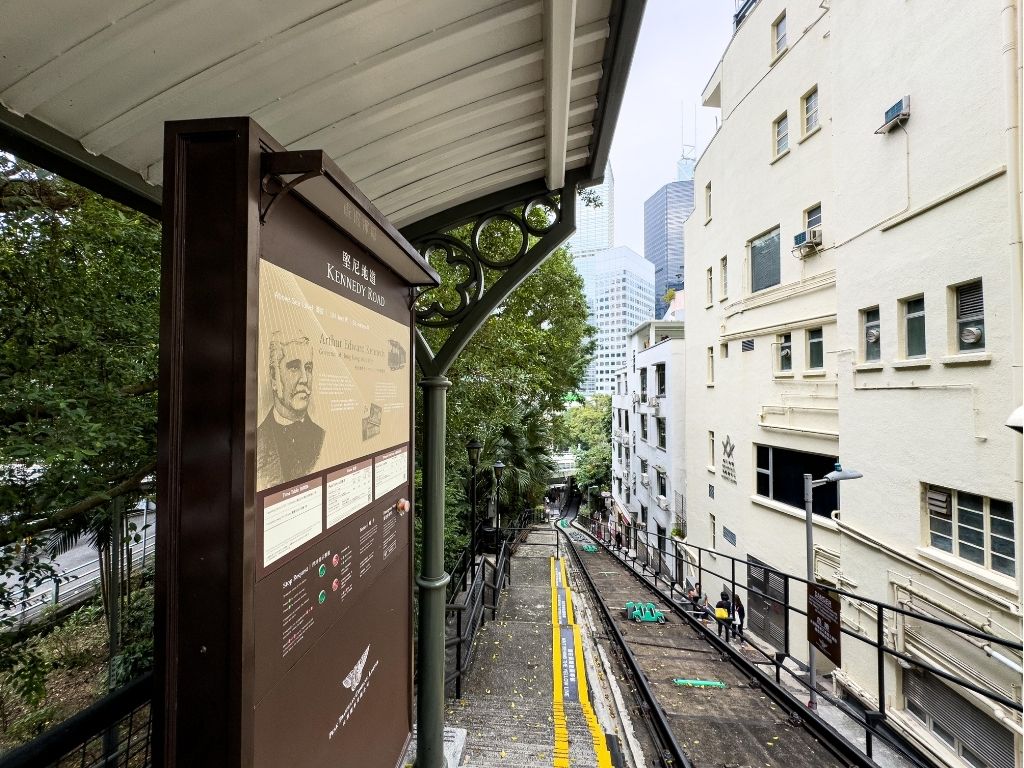
The tram operates along a 6-station route with four intermediate request stops that only open if passengers press the bell inside or the call button on the platform. Stops include: Kennedy Road at 28 m elevation, serving upscale residential high-rises in the lower Mid-Levels; MacDonnell Road at 95 m elevation near historic walks, colonial-era architecture, and local neighborhood temples; May Road at 180 m elevation right beneath the steepest grade overbridge, adjacent to the single-track passing loop; Barker Road, the final intermediate stop at 363 m elevation, offering immediate access to the upper Peak walking paths, and, finally, the upper terminus inside the Peak Tower complex. The whole 1.35 km route takes about eight minutes.
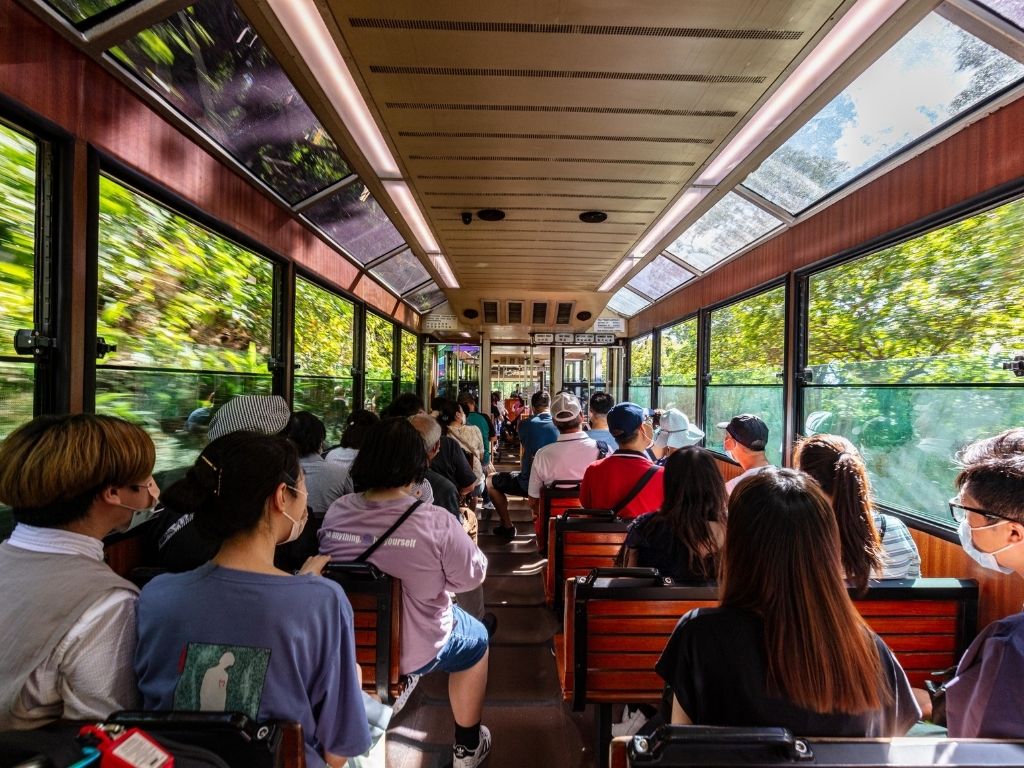
Completed in August 2022 after a HK$799 million overhaul, the 6th-generation upgrade features custom Swiss-built cars painted in historic Peak Tram Green. The tram now carries 210 passengers (a 75% increase over previous generations) with large panoramic windows and transparent ceilings. Additionally, the Central Terminus was expanded into a covered, temperature-controlled indoor waiting area accommodating up to 1,300 people.
Accessibility was also improved with step-free access and wider doors for wheelchair users and strollers. It’s a far cry from the days when, from 1909 to 1949, the front two seats were legally reserved for the Governor of Hong Kong and released only two minutes before departure; and prior to electrification in 1926, the cars had three classes: First (colonial officials and Peak residents), Second (military and police), and Third (general public and animals).
Today, it’s great to know for planning that standard walk-up queues can exceed 60–90 minutes on weekends and late afternoons. Using an Octopus Card or pre-booking Fast-Track Combo Tickets are highly recommended to bypass the main ticket booth line, particularly if you’re a visitor or hosting visitors on a short trip.
Meanwhile, what you might not be aware of, is that the terminal area hosts HSBC Life Illuminations at The Peak, a 3D projection mapping show, nightly at 7:30pm, 8:30pm, and 9:30pm.