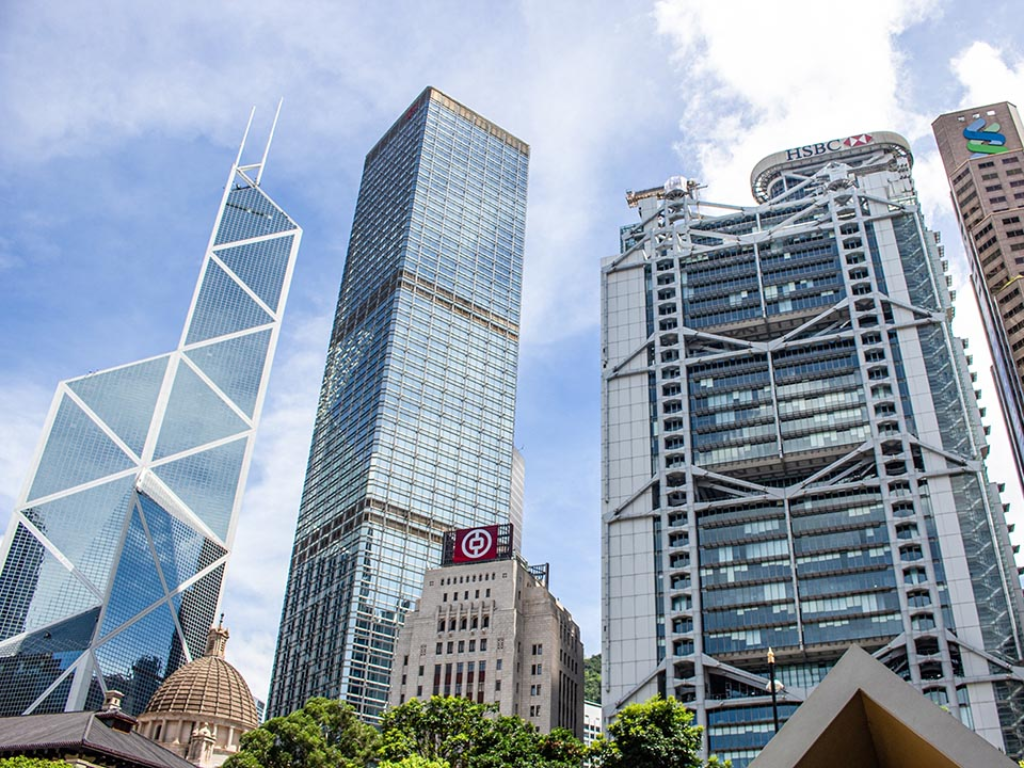
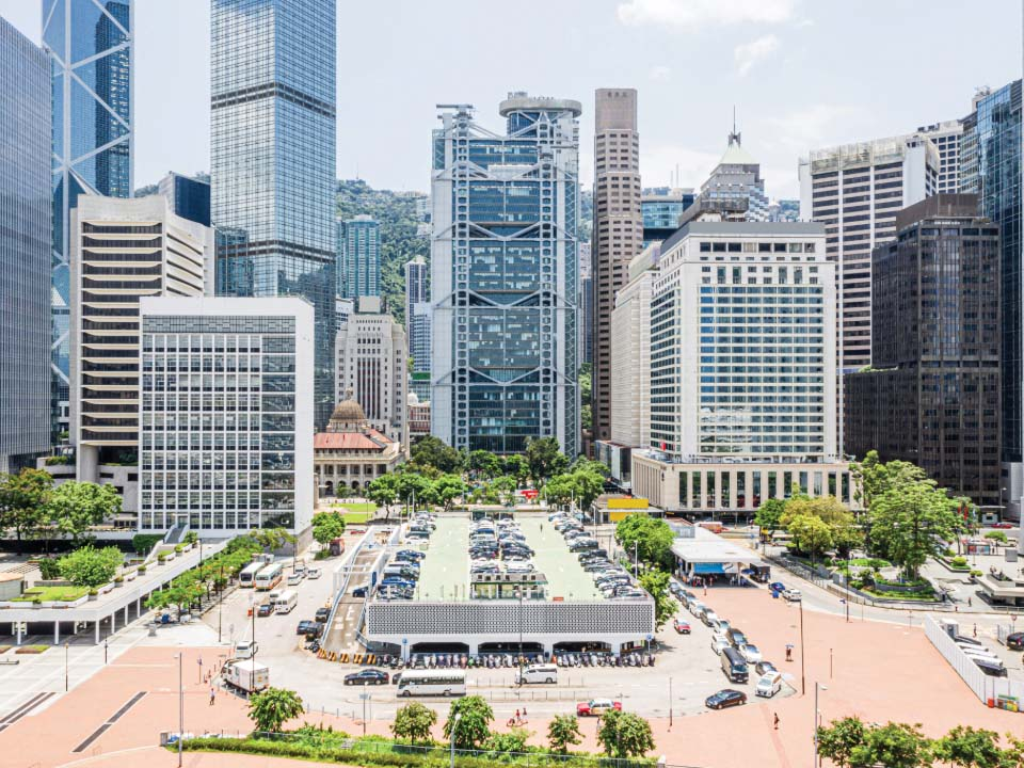
Celebrated as a landmark piece of high-tech architecture on the skyline, HSBC Main Building is known locally as ‘Wayfoong’, which means ‘focus of wealth’ and by nicknames like ‘The Oil Rig’.
Established in 1865 to finance the growing trade between Asia and Europe, HSBC is today the biggest bank in Hong Kong. Its history stretches back to 1865 when it was founded by Scotsman Thomas Sutherland, at its current site.
The bank built a succession of head offices on the site and the third iteration, completed in 1935, was the first air-conditioned building in Hong Kong.
In a nod to the city’s British colonial past, today’s building was designed by British architect Lord Norman Foster (who also designed Hong Kong International Airport) and was the most expensive building ever constructed at that time –in 1985. It was officially opened in 1986 and cost HK$5,2 billion to construct over four years.
Story has it that Foster’s brief was to create the best bank headquarters in the world, and the building is certainly innovative, having its structural components on the exterior, freeing the interior from obstructive columns and creating a vast, open layout that is much beloved of the city’s domestic workers, who gather there on its gently undulating ground floor on Sundays.
But there’s more to this design than careful space saving. Foster’s attention to detail and fusion of modernist principles and traditional Chinese elements is masterful.
The building is 178.8 m high with 47 storeys and four basement levels. The building has a modular design consisting of five steel modules, which were prefabricated in the UK and shipped to Hong Kong. About 30,000 tons of steel and 4,500 tons of aluminium were used.
Amid the ever-shifting surroundings, the watchful bronze lions Stephen and Stitt, by sculptor W.W. Wagstaff, named after the bank managers in Hong Kong and Shanghai are reminders of the bank’s past.
The pair, modelled on those at the Shanghai Bund branch, reflects a distinct division of character and pose with Stephen, the former Hong Kong manager roaring and Stitt portrayed as calm and alert after the Shanghai branch manager.
The lions have a storied oast. They sustained shrapnel gashes during the December 1941 Battle of Hong Kong. Japanese forces later shipped them to Osaka to be melted for munitions, only for an American sailor to spot them intact on a dock in 1945. They returned in 1946.
During the day, it’s certainly worth taking the escalator up to the first floor — a light-filled space where visitors can sit on one of the couches and walk through the atrium to look up and see how the building is constructed. Meanwhile, a nighttime visit when the exterior elevation of the bank is all lit up, is also highly recommended.