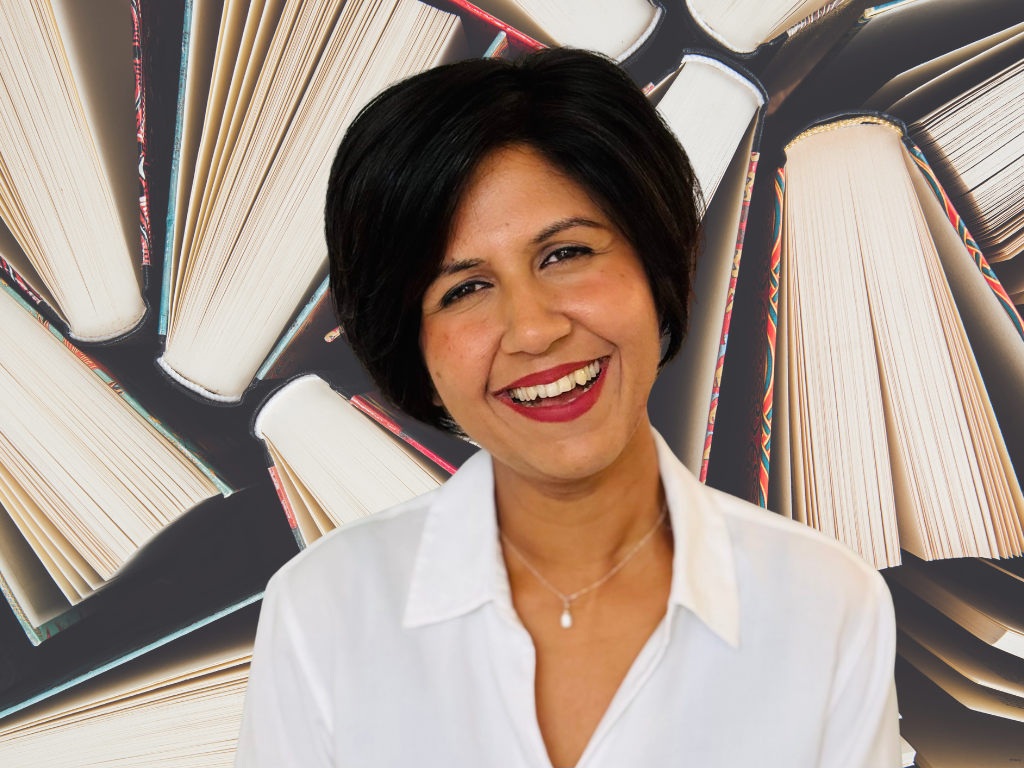
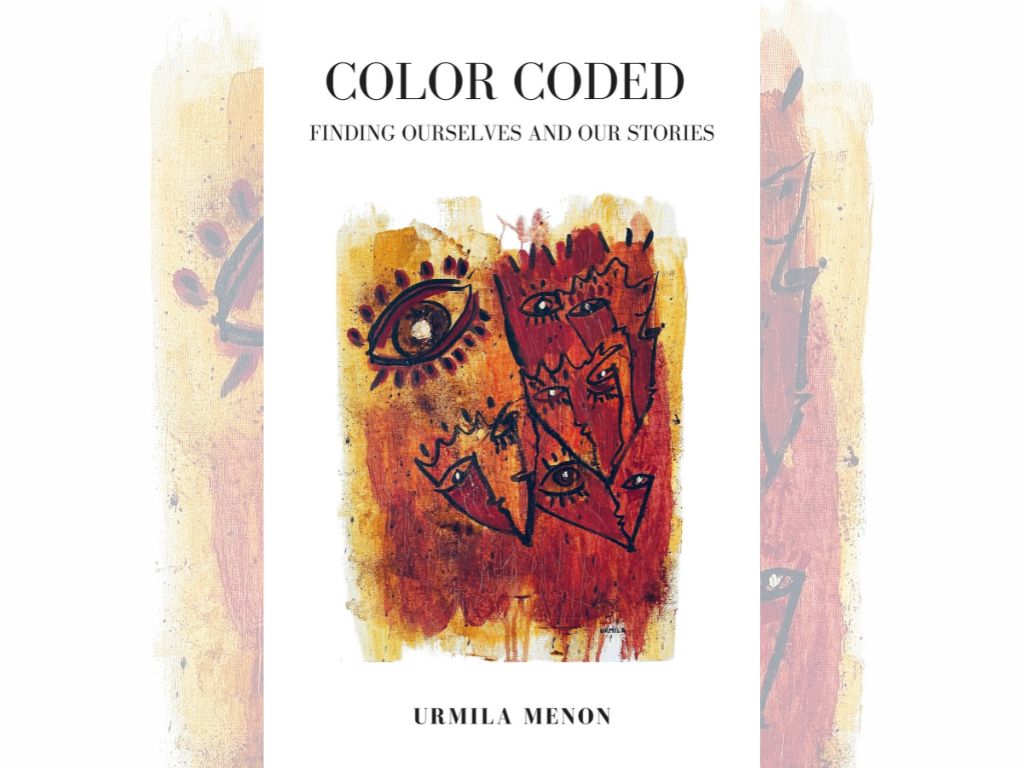
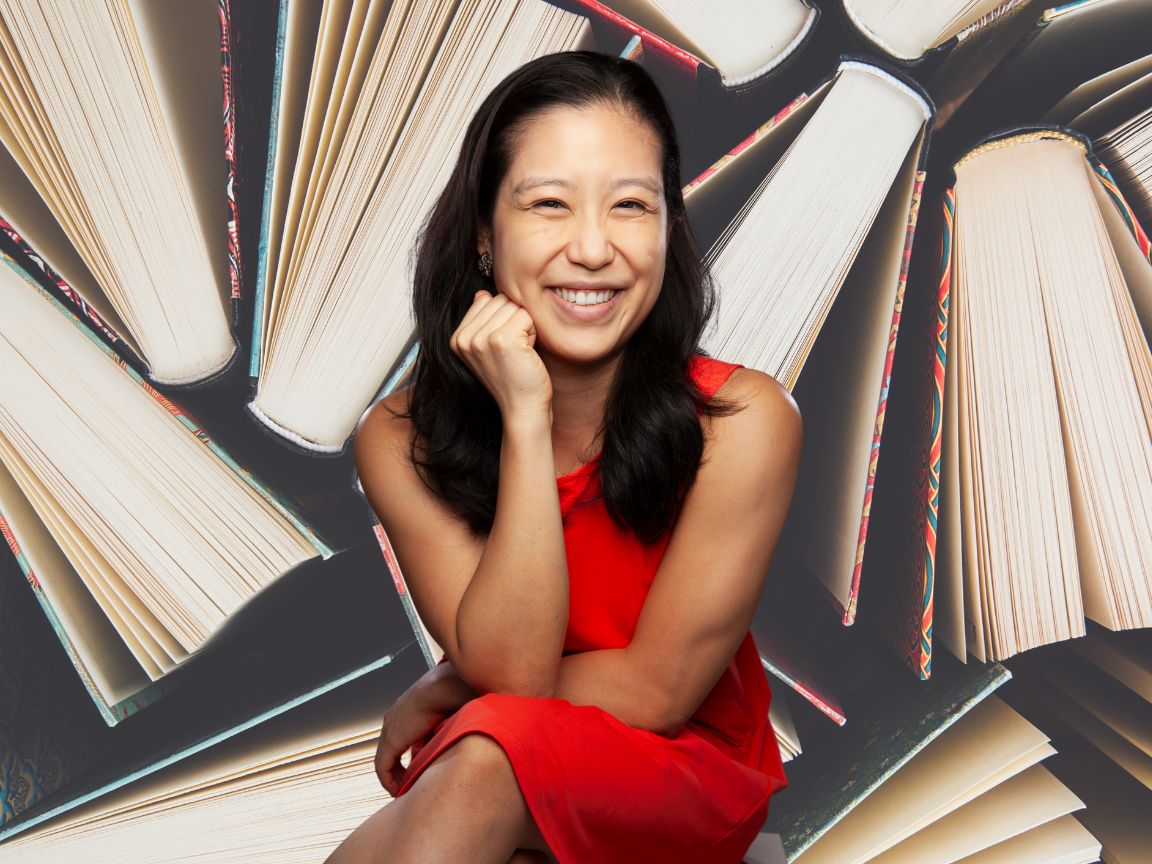
A writer since she was a child, Urmila Menon published her first book Color Coded: Finding Ourselves and Our Stories earlier this year. The multi-hyphenate has taken up running to help deal with the mental demands of writing and says that moving to Hong Kong, the variety of hats she wears and repetition have all helped along the way.
How did you become a writer?
I don’t think I ever became a writer. I’ve always been one.
As a child, I wrote in diaries with dramatic sincerity. I sent pieces to local newspapers. I filled school magazines with essays and reflections. Writing was simply how I made sense of the world — how I processed joy, confusion, imagination, and everything in between.
Even when I expressed myself through art, I would write long captions to accompany the work. Over time, people began telling me they loved the words as much as the visuals — sometimes more. My mother and, later, my husband would gently say, “Your real gift is writing.” I used to dismiss it because it felt so natural. The things that come effortlessly are often the ones we overlook.
I wrote this book because I couldn’t find it when I needed it most. And I’ve always believed in being the change I wish to see in the world. Writing, for me, isn’t a career pivot. It’s a lifelong conversation with myself — and now, with my readers.
What would you be doing otherwise?
The truth is, I don’t only write. I’m an artist, an educator, a trainer, and a speaker. I wear many hats and for a long time I wondered if that was a distraction. Would I have written more books if I focused on just one thing? Perhaps. But I’ve come to see that my “multi-hyphenate” life is not a detour — it’s nourishment. Each role gives me lived experience. Each classroom, workshop and stage adds texture to my perspective. Those experiences become threads in my writing, creating something richer and more layered than I could produce from isolation.
If I only wrote, I suspect I might eventually run dry. Living fully keeps my writing alive. It keeps it honest.
How did you come to be in this part of the world and begin writing
We moved to Hong Kong seven years ago because of my husband’s overseas posting. What I didn’t anticipate was how transformative the move would be on so many levels.
Hong Kong is a city of contrasts — layered, fast-paced, intense. Living here held up a mirror to my own identity while also giving me a map to navigate new cultural conversations.I often say this book would not have existed had I not moved here.
Geography changes you. And sometimes, distance from home sharpens your voice.
Of the characters you have created, which is your favourite and why?
My book is a creative non-fiction, centred on identity, creativity and representation. One chapter close to my heart is about what I call the “unseen heroes.”
These are the women in my own life — my grandmother, my mother, my aunt — deeply creative souls whose talents never fully saw the light of day because of circumstance, culture, or responsibility.They are my favourite “characters” because they never saw themselves as extraordinary. Yet to me, they were.
Writing about them felt like restoration. Like giving language to a quiet legacy. Many of us have such unseen heroes in our families — people whose creativity was expressed in small, sacred ways.
Honouring them felt deeply personal and profoundly necessary.
Tell us about your writing method. Is there a secret?
I don’t know if it’s a secret — but I deeply believe in ritual. For me, writing requires a dedicated space. I tried cafés and co-working spaces, but I realised I needed something quieter and more constant — less stimulating. The public libraries in Hong Kong became my sanctuary. Their calm rhythm allowed me to enter a deeper mental space.
I also rely on sensory cues: the same playlist, the same seat when possible, and (admittedly) an alarming amount of cold coffee. Repetition trains the brain. When those elements align, my mind recognises it’s time to write. Discipline, more than inspiration, carried this book through.
But there’s something else I’ve learned: movement is magic. Writing intensely is mentally demanding. It jams your thoughts together. You’re holding ideas, emotions, structure, memory — all at once. It takes a real toll on your nervous system.
About six months ago, I started running — something I never imagined I’d say. I’ve always joked that I only “ran my mouth.” But actual running changed my writing. The physical movement created mental spaciousness. It cleared the static. It strengthened my creativity. When the brain feels blocked, the body often holds the key. Movement — whether it’s running, walking, yoga — becomes medicine. I genuinely believe that anyone who wants to write seriously must find a form of movement that supports them. Writing requires mental endurance. The body must be part of that equation.
Which author, alive or dead, would you most like to meet?
There are so many, but I would go with Ruskin Bond.
As a hyper-imaginative, only child, I grew up wandering through his worlds. His writing feels intimate and nostalgic even now— like someone gently narrating the quiet corners of childhood. I once came very close to meeting him, and I still hope I might someday. I would love to ask him how he preserved that simplicity in his storytelling — how he made the ordinary feel enchanted. His books were companions during my formative years.
Tell us about your favourite bookshop in the world.
I don’t have just one. An independent bookstore tucked into a quiet lane has its own charm. So does a large chain filled with endless shelves. And then there are libraries — which, for me, feel almost sacred. It’s never about the branding. It’s about the presence of books. Any space that houses stories feels like a passport to imagination. That’s what makes it magical everytime.
What advice would you give your younger, writer self?
I would tell her: all those ink-stained fingers are totally worth it. Every diary entry. Every overwritten sentence. Every page you thought no one would read. For a long time, you will underestimate your writing because it feels effortless. You’ll think it doesn’t count because it comes naturally. But one day, you will realise it is your strongest instrument.
You will write a book that becomes a #1 Amazon Bestseller which will stay there for seven weeks. It will continue to remain in the top rankings months after its release. But what will move you most isn’t the ranking. It will be the messages.
The women who say, “I thought I was the only one.” The creatives who say, “You’ve given language to something I couldn’t name.” The readers who say, “I finally feel seen.”
For most of your life, you will feel like a misfit — too expressive, too intense, too much. But you’re only a misfit until you find your people. When you do, you realise you were never alone. You were simply early to your own tribe. Sharing the journey of writing this book brought me allies I never had growing up. It created a community. It reminded me that resonance is far more powerful than recognition. Success is wonderful. But resonance is transformative.
And when your words help someone feel seen, heard, or less alone — that is when you understand what they were meant for.
Color Coded: Finding Ourselves & Our Stories by Urmila Menon is on sale at Bookazine.
Share
About the Author
Bookish Everybody
Books and reading are too often on the periphery. Enter: Bookish Everybody, a one-stop community of book enthusiasts to read or write reviews, join read-alongs, buy/sell/give books and join our competitions to win books: www.bookisheverybody.com.