Being Neighbourly x Sean Robinson, certified Yoga instructor
Vajrasana, Thunderbolt Pose - Great for Nurses
Author/
Being Neighbourly
Share
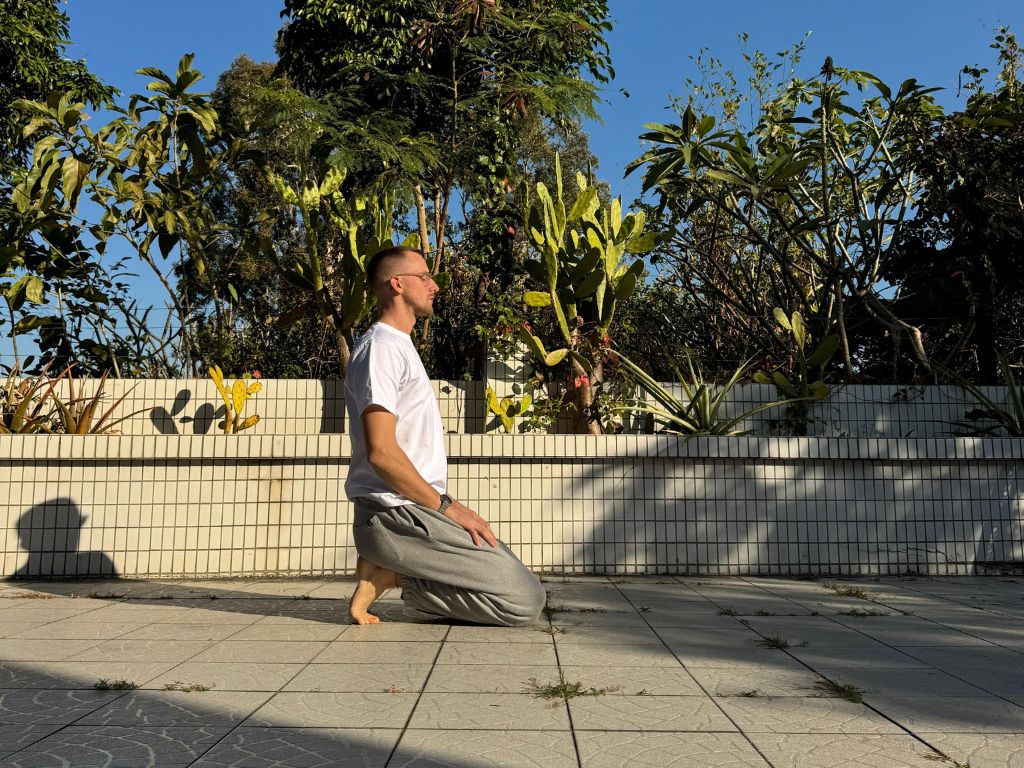
Nurses are often described as the heartbeat of a hospital, working long shifts, frequently on their feet. Their roles are not only physically demanding but also emotionally taxing. To support these dedicated professionals, we recommend a variation of Vajrasana , known as the “toe squat.” In this pose, instead of pointing the feet and toes, the ankles are flexed, and the toes are tucked under. This position nourishes the soles, as reflexology suggests that “everything starts with the feet.” While holding the pose for a few seconds to a few minutes, focus on lengthening your exhalation, whether through the mouth or nose.Longer exhales help slow the heart rate and decrease blood pressure, promoting relaxation for both the body and mind. This practice is a simple yet effective way to rejuvenate and support the well-being of nurses.
How to do the pose
Sean Robinson demonstrating the Thunderbolt pose.
1. Starting off
Kneel on the floor with your knees together and feet slightly apart.
2. Ankle position
Flex your ankles and tuck your toes under, resting the tops of your feet on the floor.
3. Sit back
Gently lower your hips onto your heels, ensuring your weight is evenly distributed.
4. Straighten up
Keep your spine straight and shoulders relaxed, aligning your head over your spine.
5. What to do with your hands
Rest your hands on your thighs or place them in your lap, palms facing up or down.
6. What to do then...
Close your eyes and take slow, deep breaths, focusing on lengthening your exhalation.
7. Hold the pose
Maintain the position for 30 seconds to a few minutes, depending on your comfort level.
8. Release
To exit, gently lift your hips off your heels and return to a kneeling position or sit cross-legged.
Benefits
Improves digestion: Helps relieve digestive issues and promotes better digestion
Strengthens the legs: Engages and strengthens the thighs, calves, and ankles
Enhances posture: Encourages proper alignment of the spine and improves overall posture
Promotes relaxation: Calms the mind and reduces stress through focused breathing
Increases flexibility: Opens up the hips and improves flexibility in the lower body
Reduces fatigue: Provides a restorative effect, helping to alleviate fatigue
Supports circulation: Enhances blood circulation to the lower extremities
Balances energy: Helps balance energy levels and promotes a sense of stability
Facilitates meditation: Serves as a grounding pose for meditation and mindfulness practices
Extra Information
Ideally, the student sits the hips, the heels, the spine vertical. This pose is much harder than it looks. To make it softer, place a cushion between the heels and the hips and/or lean the spine forwards.
Sean is a self-proclaimed nerd – obsessed with words, anatomy and pedagogy (the art of teaching).
If you’ve been to his classes, or seen his Instagram, you also know he loves to draw. He uses his (child-like) drawings to facilitate his teachings in an attempt to better serve those who, like him, are visual learners.
Before Yoga his primary form of exercise and expression was BMX – a bike designed for performing tricks which is honestly was too small for a person over 6 feet tall.
In his past life he was a speech and language therapist which probably explains the fascination with communication.
Stay tuned for Sean Robinson’s upcoming Yoga for the Professions contributions.
Share
About the Author
Being Neighbourly
For over 20 years, the people behind BN have been creating content on the best things in life: food, travel and inspirational people.
Browse our Shop!
From books to posters, notebooks and pencils, we've got you sorted.